

Words: John Baron. Photos: Kelvin Wakefield
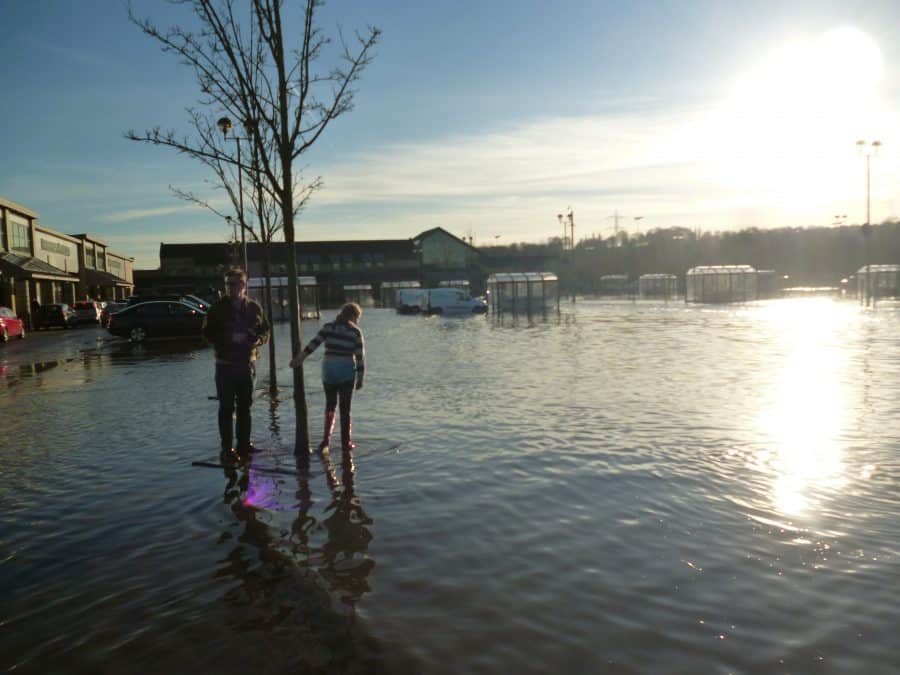
It seems hard to believe a decade has passed since Storm Eva wreaked havoc, causing the River Aire to break its banks along the Kirkstall valley and leaving a trail of devastation in its wake.
The memories of the freezing cold waters of the Aire flooding local businesses and rendering Kirkstall Road impassable will live with those affected for years to come. It was surreal and heartbreaking.

But the overriding memories are of incredible community spirit and the determination of a community not to be beaten.
As the flood waters receded to reveal sludge, devastation and broken dreams, people donned their wellies and rallied. Some carried buckets and shovels. Some had brushes and jet washes, some were armed with hot drinks and food.
Within 48 hours a veritable army of volunteers – estimates put numbers at over 1,000 – began the daunting task of cleaning up.
WLD reported on what was an ‘inspirational’ response as 40 or so volunteers met at the Kirkstall Bridge Inn car park to start to reclaim the community.

Kirkstall resident Paul Long, who ran the Incredible Edible Kirkstall Group, said at the time:“There’s been an amazing sense of community spirit shown by local residents to support those affected by the flood.”
Residents like Lucinda Yeadon – a councillor at the time – helped to galvanise the community response, helping to clean out devastated businesses.
At the other side of Kirkstall Open Source Arts’ base in Kirkstall Road acted as the central point for volunteers, a drop off point for donations and resource, plus acting as a food and recoop space.


Led by Phil Marken and others, Open Source Arts proved to be the central hub for both work in the community for months to come, and also for overseeing action through river cleanups co-ordinated by the Team Kirkstall group.
Shopkeepers were mopping water out of their properties and stood in small groups outside, talking about the damage. It was a very different scene to 24 hourse earlier, when the busy arterial road into Leeds city centre had been turned into a river.
Matthew Pedder, who runs the Tyranosaurus Pets store, said he’d had groups of strangers knocking on his door to see if they could help. Sheesh Mahal Restaurant owner Azram Chaudhry said he’d been touched by the response of customers and friends to his plight but despaired at the cost of repairs.
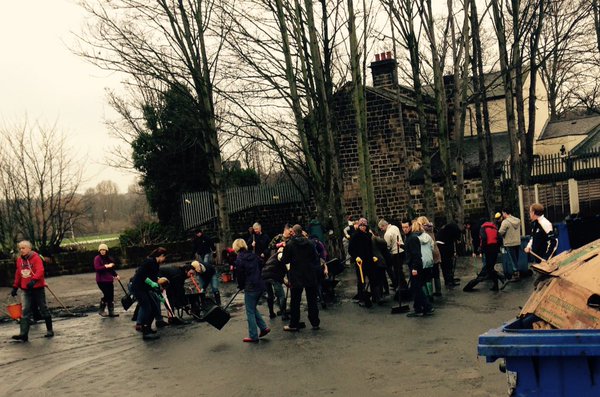
After two days of despair and heartbreak, December 28 was the day the people of Kirkstall and Burley came together and reclaimed their community from the flood water. Inspiring stuff, although for the victims of the flood many more hours of hard work remained.
Volunteers also rallied at Rodley Nature Reserve, which had also borne the brunt of the floods, and also at Armley Mills, which had also been flooded and would remain closed for some months afterwards.
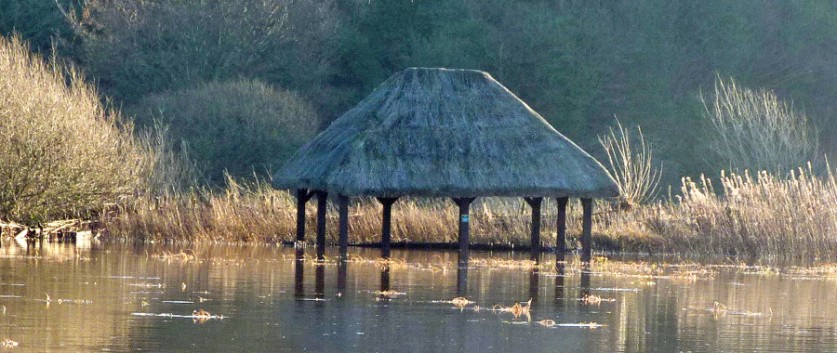
In monetary terms, it is estimated that the floods cost Leeds £36.8m in direct costs and the wider region over £500m to clean up. However, the impact on the physical and mental health of residents and business owners was incalculable.
Sadly, some businesses sadly never recovered. And some were also unable to secure insurance at reasonable rates, which forced the. to close or move elsewhere.
A decade on from the floods, the city now benefits from state-of-the-art flood defences. The defences forma £200m project to protect 4,000 homes, 1,000 businesses, and safeguard 33,000 jobs across the city to a 1-in-200-year standard of protection.
Work saw the introduction of several miles of linear flood defences, the introduction of several new pumping stations and flow control structures, and the construction of a huge flood storage area near Calverley.

The Leader of Leeds City Council, Councillor James Lewis, said: “The Boxing Day floods of 2015 directly impacted thousands of people and hundreds of businesses across the city, causing untold misery and impacting people’s health, wellbeing, livelihoods, and property.
“Ten years on from that dreadful day, we can take pride in the decade of dedication, partnership working and teamwork that has delivered some of the UK’s most robust flood defence infrastructure to mitigate the threat of a repeat flooding event.
“Earlier this year, Leeds launched its refreshed Leeds Ambitions, which aims to create a city that is healthy, growing, thriving and resilient. The work to increase our flood resilience impacts all these goals.
“We know that if Leeds FAS operates to its full potential just once, it will have saved more carbon cost than used to build the entire infrastructure.
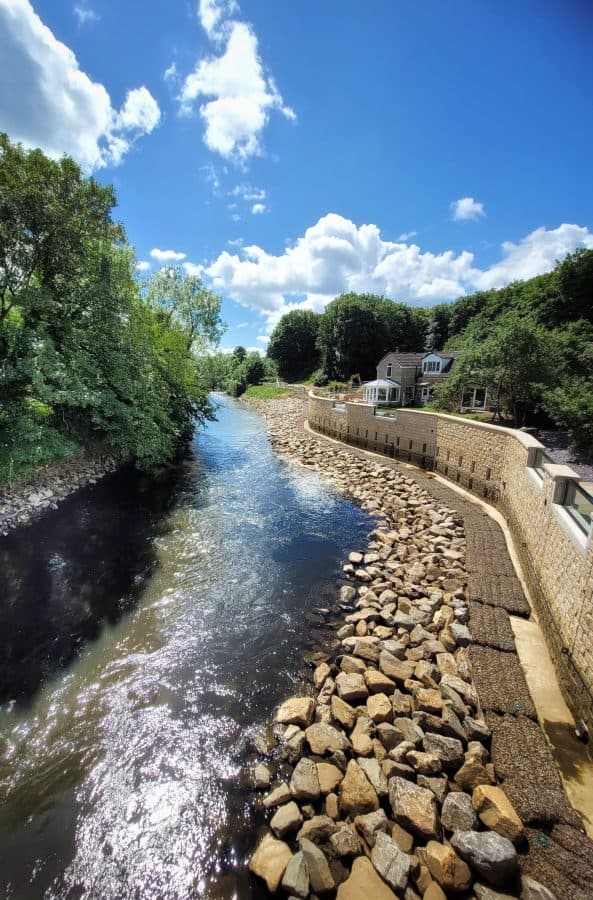
“The new flood defences also help to grow our city’s economy, ensuring that businesses and infrastructure are better protected from flooding, and once flood-prone land is made available for development, while also protecting our environment and greenspaces, our community centres and sports facilities to ensure that communities can thrive.
“But most importantly, our work over the past decade has helped protect our residents from the harm, both physical and mental, that flooding can bring.
“In 2015, my predecessor as Leader, Baroness Blake, said, ‘a preventable disaster like this must never happen again’. While we can never fully eradicate the threat of flooding from rivers or caused by surface water run-off, we can be very proud of the steps we have taken over the past decade to protect our beautiful city, its businesses, and its people as we move forward into an uncertain future for our climate.”
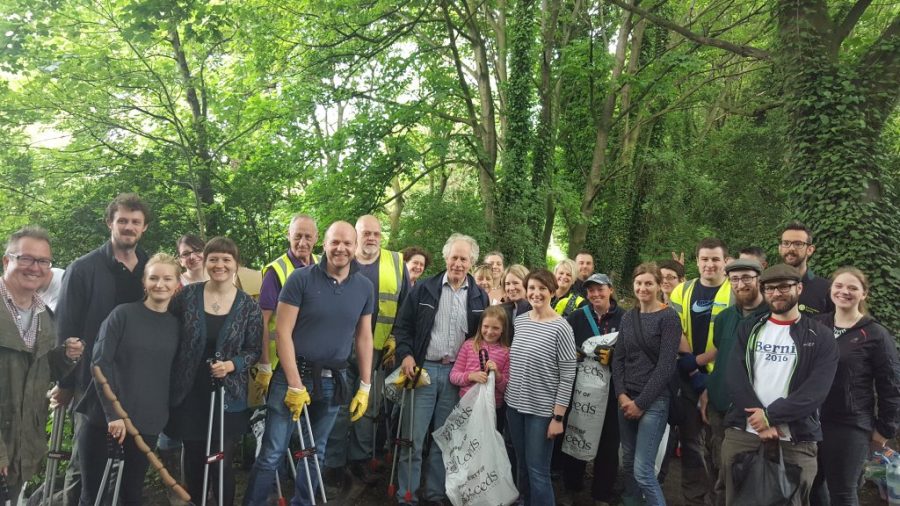
Alongside the infrastructure and engineering works within Leeds, a new organisation called the Aire Resilience Company, an innovative community interest company (CIC), has been set up to create a sustainable business model to install and maintain one of the largest natural flood management schemes in the country, complementary to the hard infrastructure measures.
Through a consortium of Leeds businesses, funding has been sought to plant up to 750,000 trees and 1240ha of land management in the upper River Aire catchment area, to slow the flow of water from the source of the river and maintain the standard of protection of the Leeds Flood Alleviation Scheme against climate change into the future.
Sponsored content