


By John Baron
The future of historic Newlay Weir is still unclear – five years after it was partially destroyed during a storm.
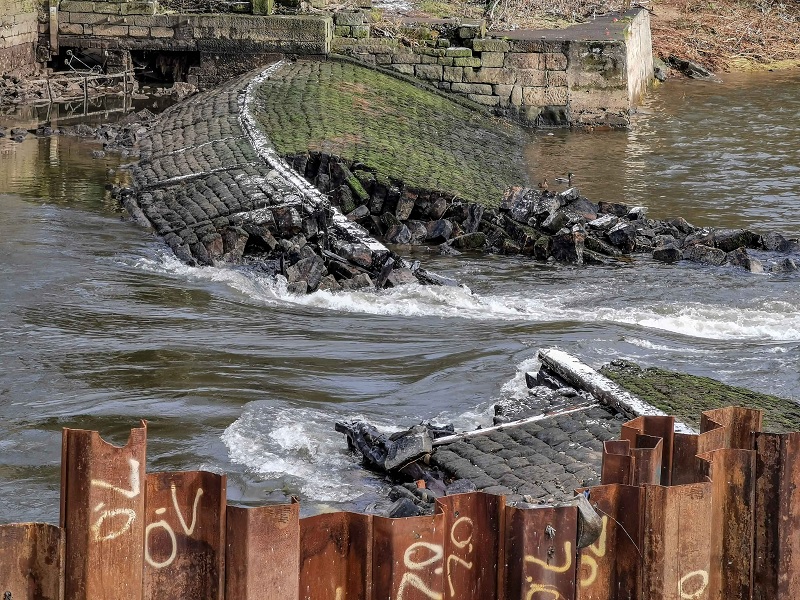
As previously reported by WLD, 17th century Newlay Weir was badly damaged during 2021’s Storm Christophe, which led to large parts of the weir being washed down the River Aire.
An independent report suggested four years ago that the construction of a fish pass at the same time is likely to have contributed towards the Grade II Listed weir being badly damaged during the storm.
Since then, members of Newlay Conservation Society and local residents have been calling for the concrete fish pass next to what remains of the weir to be demolished.
The Society has confirmed there had been ‘no movement’ on the issue in the year since WLD last covered the issue.
It’s believed unspecified legal action – understood to be between a riparian landowner and the Environment Agency – is ongoing. The Environment Agency told WLD last week that it could not comment.
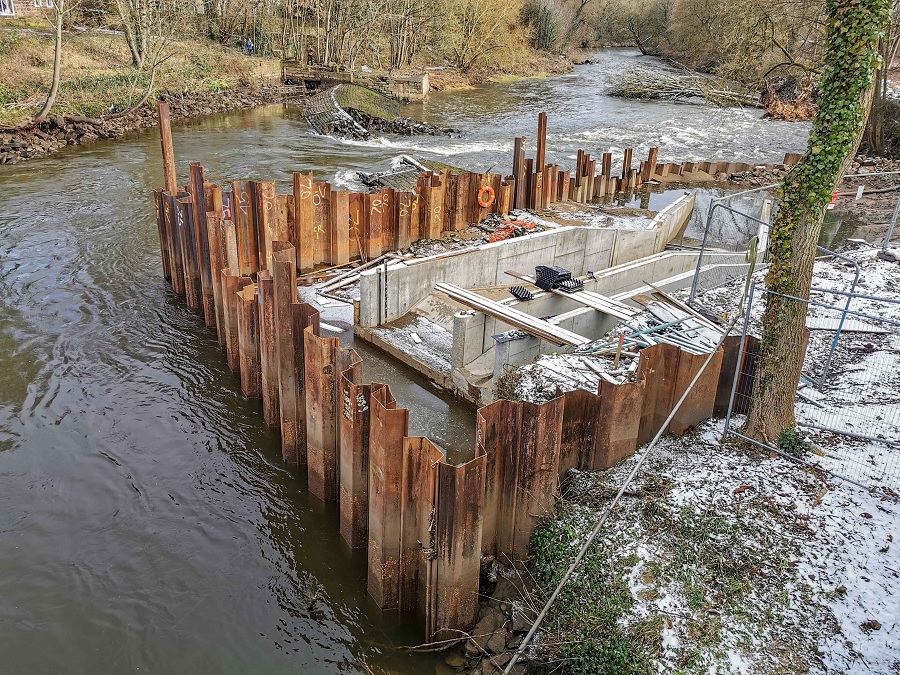
Roger Cliff, of Bramley History Society, said on social media: “The way all those plants are growing, you won’t realise there’s a concrete fish pass there.”
At the time of the collapse in 2021 work was being carried out on the Heritage Lottery-funded £2.7 million DNAire project to install fish passes at Newlay, Armley, Kirkstall and Saltaire.
The Larinier fish pass along the right bank of Newlay Weir was designed to allow passage over the weir for salmon and sea trout, which migrate from the Humber Estuary to the headwaters of the River Aire.
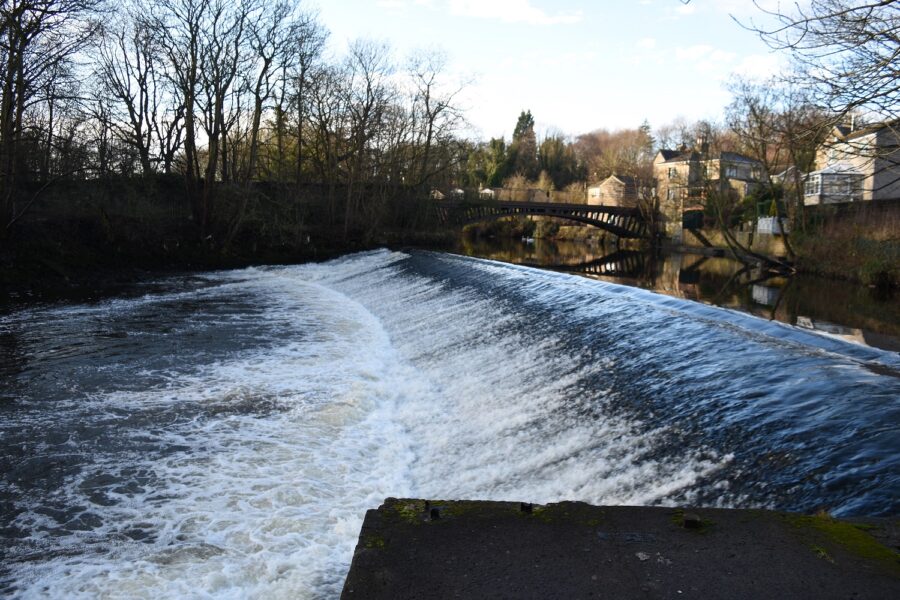
The Newlay goit in Rein Road, Newlay, was created in the 12th century on land given by Nigel de Horsforde for the monks to provide power for their corn mill at Kirkstall Abbey. Newlay Weir was built in about 1690 to provide increased flow of water to the goit for improved power for Kirkstall Forge.
Follow WLD‘s ongoing coverage of Newlay Weir here.
Sponsored content