
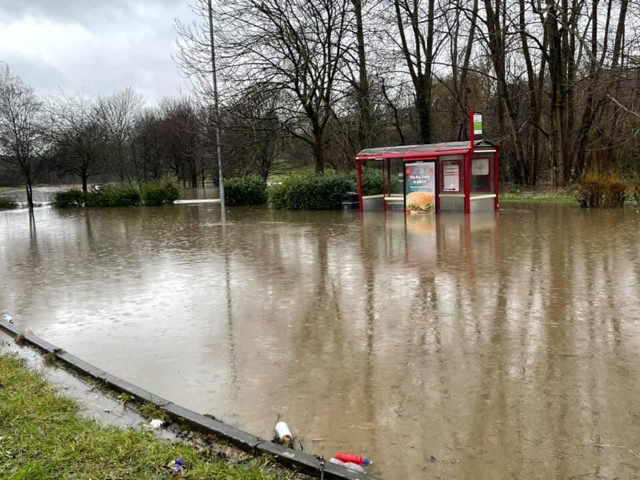

Leeds City Council is consulting on its latest Local Flood Risk Management Strategy, outlining how it intends to provide greater resilience across the city – including West Leeds.
Since publishing its first flood risk management strategy in 2012, the council has worked together with partners to reduce the risk of flooding to an estimated 5,589 properties – including properties along the Kirkstall Valley corridor which were flooded when the River Aire broke its banks on Boxing Day 2016.
This includes delivering the £200million Leeds Flood Alleviation Scheme between 2017 and 2024, along with several smaller projects across the city.
Among the flood protection schemes mentioned in the strategy document, is the already announced Wortley Beck Flood Alleviation Scheme, which is at the design stage and is estimated to cost £22.8 million.
The document says the proposed scheme would tackle flooding risk to 200 residential properties along the Ring Road and that design work on a scheme to tackle all sources of flooding was ongoing in partnership with the Environment Agency.
The strategy says current progress includes: “Completing the [Farnley] reservoir safety feasibility and then commissioning the next stage of outline design, planning application and business case.”
Competition date of the current work on Wortley Beck is earmarked for between 2026 to 2028.
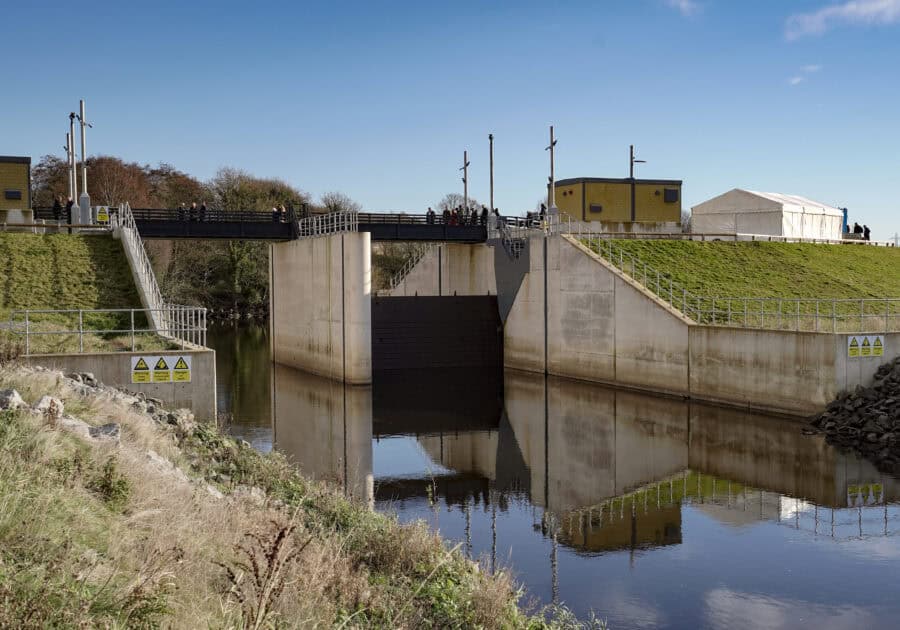
The latest version of the strategy stresses the importance of protecting Leeds’ spaces through the use of innovative technology and infrastructure, preparing for a changing climate including helping residents and businesses prepare for and recover from flood events, and working in partnership across the city to focus on the issues affecting flooding.
Councillor Peter Carlill (Lab, Calverley & Farsley), Leeds City Council’s executive member for transport and planning, said: “We can be extremely proud of the work we have delivered in partnership across Leeds to deliver major infrastructure and many projects which is keeping our city safer from the risk of flooding.
“But we cannot be complacent, because we can never be fully protected from flooding and we are all too aware of the devastation it can cause.
“Our latest flood risk management strategy builds on the work we have done so far and ensures we remain resilient into the future as we continue to adapt to the challenges of climate change.”
The council is consulting on the strategy between until Friday, 4 September. It can be viewed on its dedicated webpage, with feedback and comments to be considered before the final version is agreed in late 2026.
Sponsored content
I lived opposite Farnley balancing reservoir for nearly 40 years. It was regularly “cleaned-out” every 5or 6 years but then they stopped…. concerns for wildlife and Yorkshire Water only took happy to do nowt!.
IT WAS CONSTRUCTED TO PREVENT FLOODING….. not a recreation area…. what’s the councils problem???…. tell Yorkshire Water to get it sorted!
Ties in nicely with the new tree planting consultation launched today….
https://leedswoodlandcreation2026.commonplace.is/en-GB/proposals/outer-west
One for WLD to promote.
They can, and should, start by protecting the Greenbelt in Wortley, Farnley, & near Geldard Road…
On the one hand they want to spend £22M+ as part of this plan on flood prevention in Lower Wortley and Far Royds (hard to disagree with that)…
…but then on the other hand they want to build on Greenbelt in Lower Wortley, Farnley, and near Geldard Road (as part of the Leeds Local Plan consultations)…
Does it really take an expert in flooding and a flood prevention plan? How about some joined up thinking and ensuring that any areas in or within 5Km of potential flooding zones automatically have their Greenbelt protected in the Local Plan? It’s a free decision for the Council and will ensure flood prevention investment isn’t simply washed out… so a nett gain. Plus people dont want their Greenbelt taken away.
Joined up thinking like this could save local taxpayers millions, yes it wont solve the problem and the investment is still needed, but it certainly will stop the problem becoming worse as a result of choices being made elsewhere in the council…
Thanks WLD for bringing this to light!