
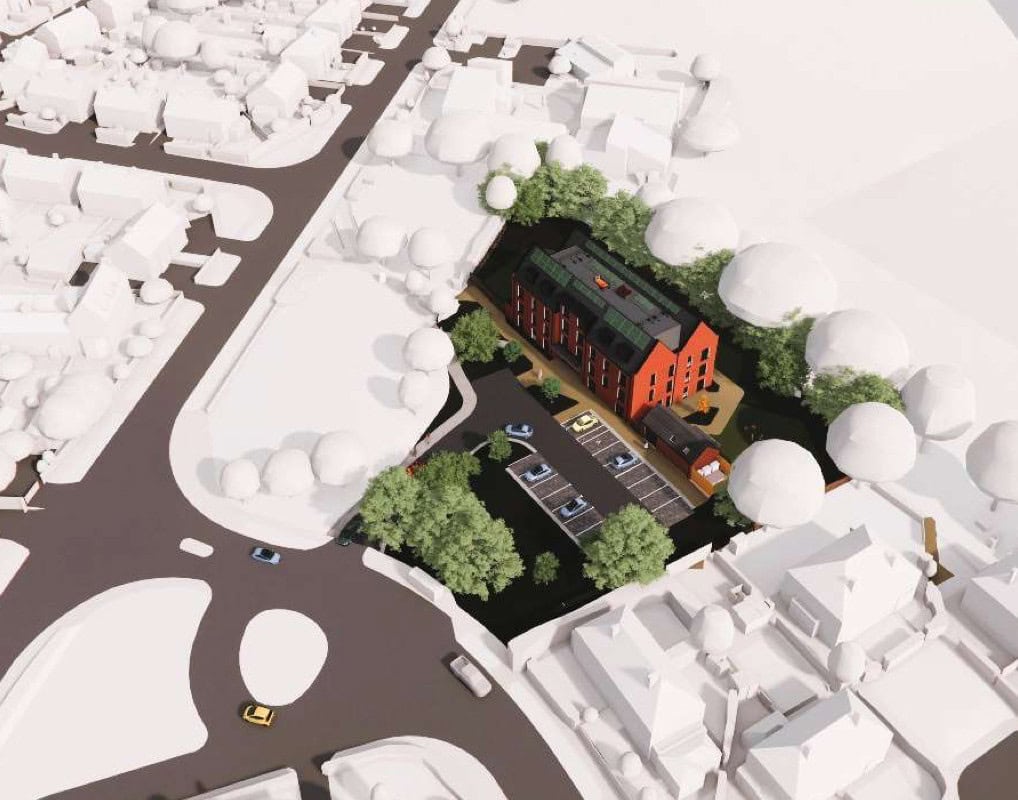

Sir;- A current planning application before Leeds City Council for 21 flats at Queenswood Drive, Kirkstall (25/06617/FU) highlights a critical disconnect in the city’s housing strategy.
While every new home is technically a step towards meeting demand, the relentless focus on small, one-bedroom flats is failing to address one of Leeds’ most pressing social and economic needs: unlocking the supply of existing family homes.
We have a paradoxical crisis in Leeds: large, publicly owned housing stock (three, four, and even five-bedroom houses) are currently occupied by elderly residents who desperately wish to downsize, yet thousands of growing families are trapped on waiting lists, living in cramped conditions, or priced out of the market entirely.
The problem isn’t a lack of desire; it’s a lack of suitable alternatives. Across Leeds, countless older residents, often in council or social housing, are rattling around in large family houses they can no longer maintain, heat, or need. They want to move out and into a modern, accessible, smaller dwelling—a one or two-bedroom home designed for easy living in later years.
Yet, when prime development sites come forward, the default strategy seems to favour high-density blocks of small, market-rate or affordable one-bed apartments. While these flats may meet short-term city centre targets, they are rarely, if ever, the specialist, ground-floor, or highly accessible smaller homes that would facilitate the mass downscaling required to ease the city’s housing gridlock.
The result is a devastating logjam:
1. Elderly residents remain in large homes against their wishes, hindering their quality of life.
2. These three, four, and five-bedroom houses—the exact homes that families are crying out for—remain off the market or unavailable for reallocation.
3. Young families are left without options, unable to access the space needed to raise children.
Every time the council approves a large block of non-specialist small units on a major site, it misses a vital opportunity to provide the “downsizing bridge” that would free up the supply chain.
Instead of continually defaulting to smaller flats, city planners need to recognise that some sites are strategically crucial for addressing the quality of stock, not just the quantity.
For sites that are well-located for public transport, schools, and community amenities—such as the area related to application 25/06617/FU the land would be far better allocated to building:
• Bungalows or accessible two-bedroom houses: Specifically designed for elderly occupants, encouraging them to move out of their larger houses.
• New three and four-bedroom houses: Directly addressing the deficit of family-sized units in the city and future-proofing the housing stock.
By focusing development on the type of homes that unlock existing family housing — rather than simply adding more small units that do little to solve the core social equity issue — Leeds City Council could make a far greater impact on thousands of families.
The choice is simple: continue with developments that keep our housing crisis stagnant, or strategically invest in “rightsizing” infrastructure to finally get families into the spacious homes they deserve. The latter is the only path forward for a sustainable and equitable Leeds.
- Stuart Long, Burley
Sponsored content

Interesting perspective but doesn’t address problem that the council has very little power to substantially alter plans it receives. One of major problems with housing is the massive increase in the space of one generation of people living on their own. Small flats are often all they can afford to rent. Conversely the major housebuilders are building lots of 3/4 bedroom houses but they are pretty expensive.